hainancorporateservices.com

Home  /  Services  /  Family Residence
Family residence · Complete guide

How to Bring Your Family to China: Visas & Residence Permits

The S visa for your spouse and children, the S-vs-Q mix-up to avoid, the documents to authenticate, and the residence permit after arrival — and how HCSG handles it all.

China-based · family relocation & residence specialists
Your family needs
S visa
not the Q visa
then a residence permit
To bring your family to China when you work or study there, your spouse and children apply for an S visa — and the mistake that derails applications is reaching for the wrong one. The S visa is for the family of foreigners living in China; the Q visa is for the family of Chinese citizens or permanent residents — so if you hold a Z work visa, your family needs S, not Q. Within the S category, S1 is for long-term stays over 180 days (followed by a residence permit), and S2 is for short family visits of up to 180 days. The part that catches African families out is the document chain: marriage and birth certificates must be notarised and authenticated before they're accepted. This guide walks the whole journey — from your work permit to your family's residence permit — and where you'd rather a China-based team handle it, that's what HCSG does.
The essentials

Three things to get right

Sort these and the rest of the process is straightforward.

S visa, not Q

Family of a foreigner

Because you're a foreign worker or student, your family applies under the S category. The Q visa is only for relatives of Chinese citizens or permanent residents.

S1 vs S2

How long they'll stay

S1 is for long-term family stays (over 180 days) and leads to a residence permit; S2 is for short visits. Choosing wrong means leaving and reapplying.

Residence permit after arrival

Within 30 days

An S1 visa gets your family into China; a residence permit, applied for at the local police within 30 days, is what lets them stay long-term.

Know the categories

S1, S2 (and Q, for comparison)

Pick by who you are (foreigner vs Chinese citizen/PR) and how long your family will stay.

VisaFor whose familyStayResidence permit?
S1Family of a foreigner in ChinaLong-term (over 180 days)Yes — apply within 30 days of arrival
S2Family of a foreigner in ChinaShort visit (up to 180 days)No — stay per the visa
Q1Family of a Chinese citizen / PRLong-term (over 180 days)Yes
Q2Family of a Chinese citizen / PRShort visit (up to 180 days)No
The route

How to bring your family to China, step by step

The order that keeps it smooth — HCSG can run any step, or the whole relocation, for you.

1

Secure your own visa first

Your family's S visa depends on your status, so you need your work (Z) visa and residence permit in place first.

2

Authenticate the relationship documents

Have your marriage certificate (for a spouse) and birth certificates (for children) notarised and authenticated in your home country.

3

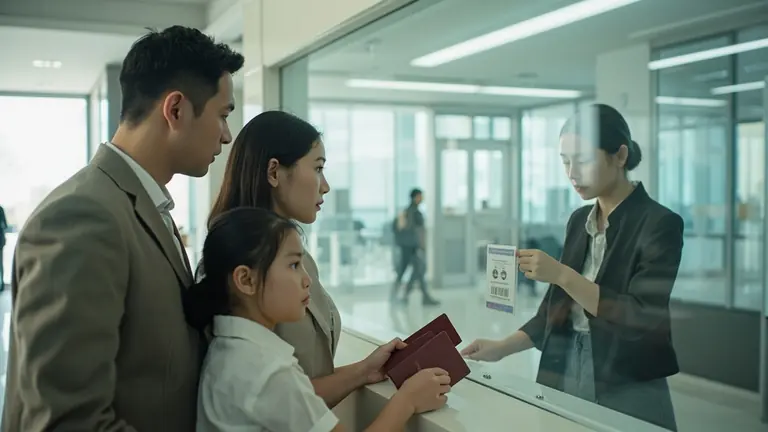
Family applies for the S visa

Your spouse and children apply for S1 (long-term) or S2 (short) at the Chinese embassy, consulate or visa centre that serves them.

4

Enter China

With the S1 visa, your family travels to China — the visa lets them enter; the residence permit (next step) lets them stay.

5

Apply for the residence permit

Within 30 days of arrival, apply at the local Public Security Bureau for each family member's dependent residence permit.

The S-vs-Q mix-up costs families weeks

It's the most common family-visa error: a foreign worker's spouse applies for a Q visa because it's “the family visa,” and the application is refused — because Q is only for relatives of Chinese citizens or permanent residents. If you're a foreigner in China on a work or study permit, your family belongs in the S category. Getting this right from the start saves a rejection, a re-file, and weeks of delay. When in doubt, ask us before anyone applies.

Relocating a family from Nigeria, Kenya, Ghana or beyond?

Plan the document chain early

For African families the paperwork — not the visa form — is the slow part. A few realities to plan around; we manage them for you.

Authentication takes time

Start it first

Marriage and birth certificates need notarisation and authentication before China accepts them. China now accepts an apostille from member countries — but many African countries, including Nigeria, Kenya and Ghana, are not yet in that system, so full consular legalisation still applies. Start early; it's the long pole.

School enrolment

Plan with the move

If children are joining, school places and the documents they need should be lined up alongside the visa, not after. We help coordinate enrolment.

The right sequence

Worker first, then family

Your work permit and residence permit come first; the family's S visas and dependent permits follow. We keep the order and timing aligned.

Can my family work or study on an S visa?

An S visa and a dependent residence permit let your family live in China — they don't, on their own, authorise your spouse to take a job. To work, a dependent generally needs their own work authorisation (a work permit and the right visa/permit). Children can usually enrol in school on a dependent permit. If your spouse plans to work, tell us early and we'll map the route.

How we help

How HCSG handles this for you

Your family's move to China, handled end to end — from authenticated documents to residence permits in hand.

Family residence permits

We prepare and lodge each dependent's residence-permit application after arrival, within the deadline.

Spousal visa applications

We assemble and submit your spouse's S-visa application with the right supporting documents.

Dependent child permits

We handle children's visas and dependent permits so the whole family is covered together.

School enrolment support

We help line up school places and the paperwork they require, in step with the move.

Renewals & extensions

We track and renew family permits so no one's status lapses while you're settled in China.

The outcome: your family legally settled in China — right category, documents authenticated, residence permits issued on time — while we carry the process.

Good to know

Questions founders ask us

Specific, net-new answers — not a repeat of the guide above.

What visa does my family need to join me in China?+
If you're a foreigner working or studying in China, your spouse and children apply under the S category — S1 for long-term stays over 180 days, S2 for short visits. The Q visa is only for relatives of Chinese citizens or permanent residents.
What's the difference between an S visa and a Q visa?+
It's about who you are, not how long you stay. S visas are for the family of foreigners living in China; Q visas are for the family of Chinese citizens or permanent residents. A foreign worker's family needs S.
How long can my family stay in China?+
With an S1 visa and a dependent residence permit, long-term — the residence permit, not the visa, sets how long they can remain, and it's renewable. An S2 short-visit visa limits the stay to the period on the visa.
What documents prove our family relationship?+
A marriage certificate for a spouse and birth certificates for children — and these must be notarised and authenticated before China will accept them. The authentication route depends on your country, so start it early.
Do we need to authenticate or apostille our certificates?+
Yes. Since China joined the Apostille Convention, an apostille can replace consular legalisation for documents from member countries. Many countries are not yet members, though — so their certificates still need full consular legalisation. Because membership changes, we confirm the current route for your specific country before you start.
Does my family have to leave China to renew?+
Usually not — dependent residence permits are renewed in China at the local exit-entry administration before they expire. We track the dates and handle renewals so no one's status lapses.
Can my spouse work on a dependent visa?+
Not automatically. An S visa or dependent residence permit allows your family to live in China, but working generally requires separate work authorisation. Tell us if your spouse plans to work and we'll map the route.
Can my children go to school on a dependent permit?+
Generally yes — children on a dependent residence permit can usually enrol in school. Places and required documents vary, so we help line up enrolment alongside the visa process.
Can HCSG handle the whole family relocation?+
Yes. We get the category right, authenticate the documents, file the S visas and dependent residence permits, support school enrolment, and manage renewals — so your family settles without the guesswork.
In this series

Keep reading

Published by the HCSG Publishing Department. This guidance reflects current China family-visa and residence-permit requirements and HCSG's advisory practice and is general information, not legal advice. For your specific situation, contact our team for a tailored consultation. Reviewed and maintained by the HCSG Publishing Department · Updated June 2026.

Bringing your family to China?

Tell us your situation — we'll confirm the right visas, authenticate the documents, and handle the residence permits so your family settles smoothly.

China-based team · Hainan FTP specialists

Connect on WeChat

Scan the QR code to connect instantly with Hainan Corporate Services Group.

WeChat QR
WeChat ID: HSC786HSC
  1. Open WeChat
  2. Tap “+” → Scan
  3. Scan the QR code
HC
×